What should I bring to my appointment?
If possible, bring any medical tests, reports, X-rays, MRI or ultrasound scans related to the reason for your visit.
A session always begins with a conversation to understand why you have come, your history and your goals.
The practitioner asks about your discomfort, how it has developed, your medical history, current treatment, work or sporting activity and any tests already done.
Functional and mobility tests may be carried out to identify the areas to examine and to check that osteopathic care is appropriate.
Depending on your situation, different approaches may be used: articular, functional, myofascial, cranial or visceral techniques. They are adapted to your comfort and clinical context.
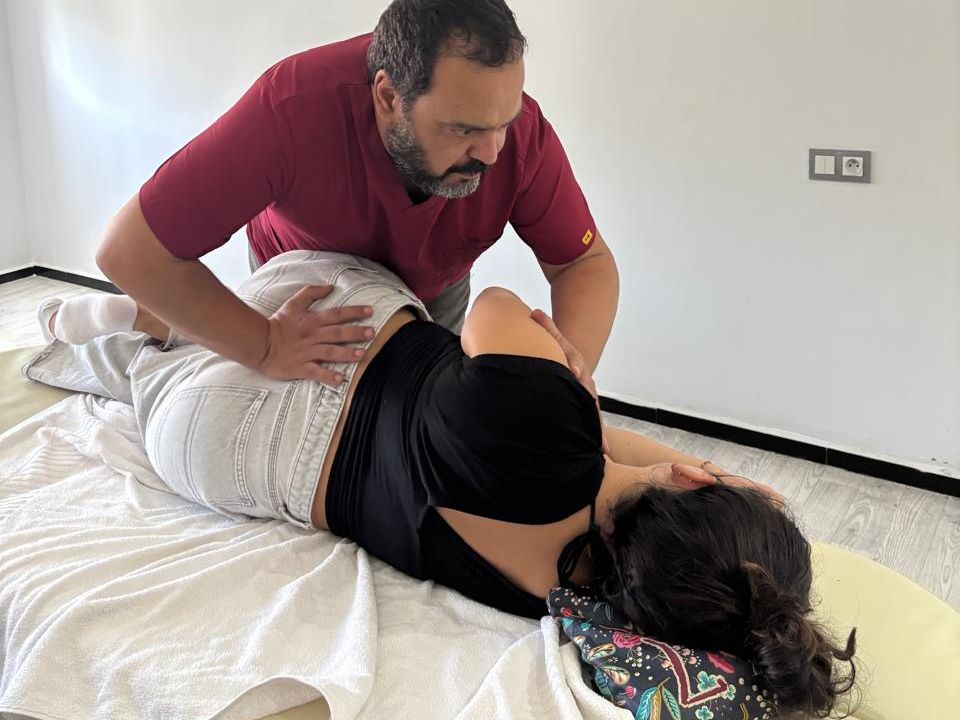
The session may end with simple recommendations: mobility, a gradual return to activity, ergonomics, or symptoms to keep an eye on.
Unusually severe pain, a significant recent injury, loss of strength, neurological symptoms, fever, chest pain, breathlessness or any worrying symptom call for urgent medical advice.
In an emergency in Morocco, call the SAMU ambulance service on 141 or Civil Protection on 15, or go to the nearest emergency department.
Specific guidance for each condition is available on the conditions page.
If possible, bring any medical tests, reports, X-rays, MRI or ultrasound scans related to the reason for your visit.
A referral is not usually needed to book. If you are unsure about your situation, ask your doctor for advice.
No. Osteopathy does not replace a medical diagnosis, prescribed treatment, or pregnancy follow-up by a qualified health professional.